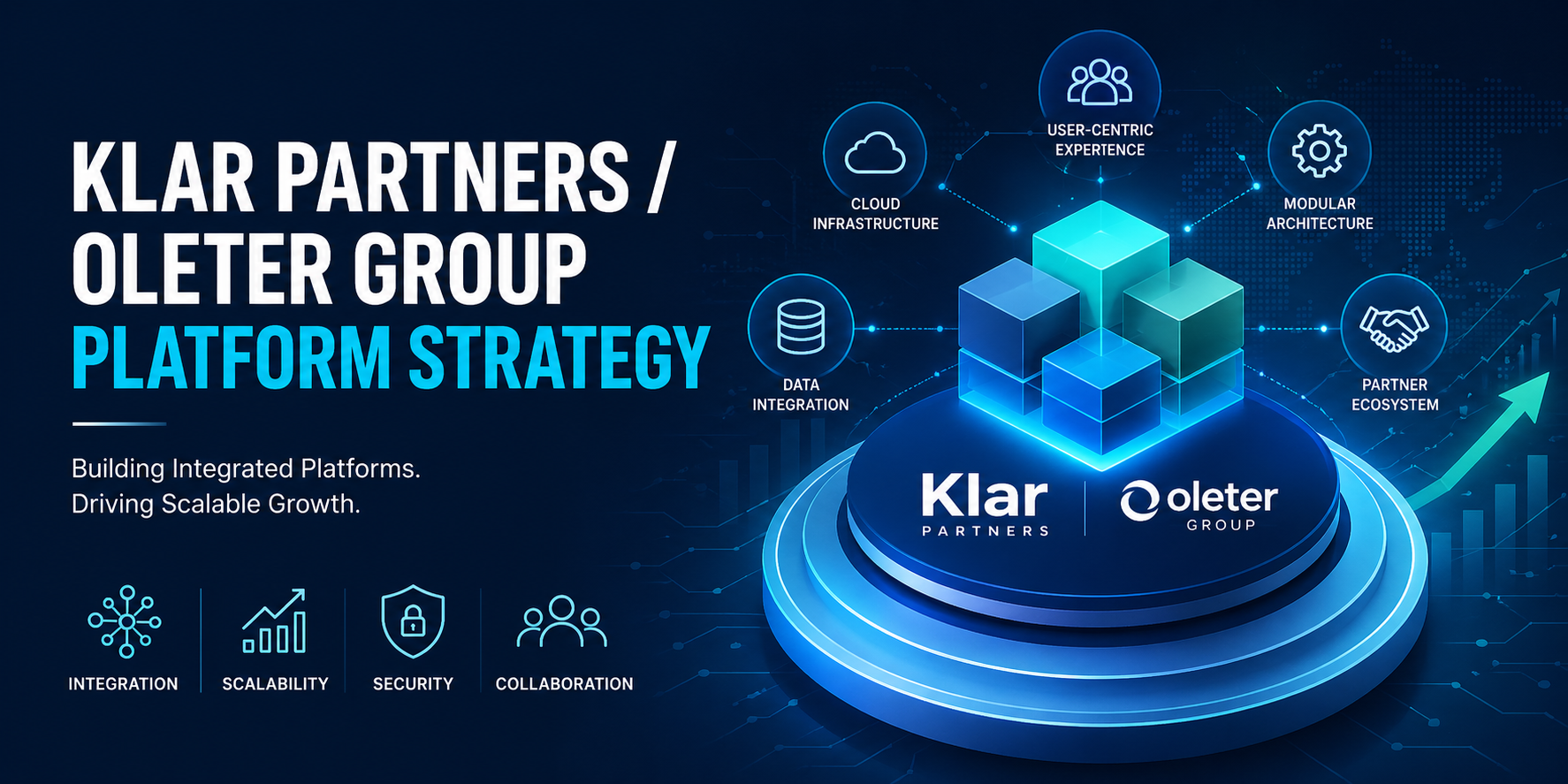
The rise of platform-driven business models has reshaped how companies scale, compete, and deliver value. Within this landscape, klar partners / oleter group platform strategy stands out as a structured approach focused on integration, scalability, and long-term ecosystem value. This strategy is not just about technology adoption; it reflects a broader shift toward interconnected systems that drive efficiency and sustainable growth.
Understanding the Foundation of Klar Partners / Oleter Group Platform Strategy
At its core, klar partners / oleter group platform strategy revolves around building a unified digital ecosystem where services, data, and user experiences are seamlessly connected. Unlike traditional linear business models, this approach emphasizes network effects, where each additional participant increases the overall value of the platform.
The Platform-Centric Philosophy
The strategy prioritizes platforms as the central operating layer rather than treating them as supporting tools. This means that business processes, customer interactions, and partner integrations are all designed around a shared digital infrastructure. Such an approach enables faster innovation cycles and reduces operational silos.
Strategic Intent Behind the Model
The intention is not merely to digitize existing workflows but to create a flexible architecture that supports continuous evolution. By aligning technology with business goals, organizations can respond to market changes without needing complete system overhauls.
Key Components of the Platform Architecture
To understand how klar partners / oleter group platform strategy functions in practice, it is essential to examine its structural components. Each layer contributes to the overall efficiency and adaptability of the system.
Data Integration and Interoperability
Data serves as the backbone of any platform strategy. In this framework, emphasis is placed on real-time data exchange across systems. This ensures that decision-making is informed, timely, and aligned with current operational realities.
Interoperability allows different tools and services to communicate without friction. This reduces redundancy and enhances collaboration between internal teams and external partners.
Modular Technology Stack
A modular approach enables organizations to add, remove, or upgrade components without disrupting the entire system. This flexibility is critical in maintaining competitiveness in dynamic markets.
By decoupling core functionalities, businesses can experiment with new features while maintaining stability in essential operations.
User-Centric Experience Design
The platform is designed with the end user in mind, whether that user is a customer, partner, or internal stakeholder. This focus ensures that every interaction within the ecosystem is intuitive and valuable.
User experience is not treated as a final layer but as an integral part of the architecture, influencing design decisions from the ground up.
How Klar Partners / Oleter Group Platform Strategy Drives Growth
Growth within this framework is achieved through a combination of scalability, efficiency, and network expansion. Each element reinforces the others, creating a compounding effect.
Scalability Through Digital Infrastructure
Traditional growth often requires proportional increases in resources. In contrast, a platform-based approach allows businesses to scale operations without linear cost increases. Once the infrastructure is in place, adding new users or services becomes significantly more efficient.
Network Effects and Ecosystem Expansion
As more participants join the platform, the value of the ecosystem increases. This attracts additional users, creating a self-reinforcing growth cycle. The strategy leverages this dynamic to build sustainable competitive advantages.
Operational Efficiency and Cost Optimization
By consolidating processes within a single platform, organizations reduce duplication and streamline workflows. This leads to lower operational costs and improved productivity across departments.
Implementation Strategy: From Vision to Execution
Adopting klar partners / oleter group platform strategy requires careful planning and execution. It is not a one-time initiative but an ongoing transformation.
Aligning Business Objectives with Platform Goals
The first step involves defining clear objectives that the platform will support. This alignment ensures that technology investments deliver measurable business outcomes.
Organizations must identify key performance indicators that reflect both operational efficiency and user satisfaction.
Building a Scalable Infrastructure
Infrastructure development should prioritize flexibility and resilience. Cloud-based solutions often play a central role, enabling rapid deployment and easy scaling.
Security and compliance must also be integrated into the foundation to protect data and maintain trust.
Partner Integration and Collaboration
A successful platform strategy extends beyond internal operations. Integrating external partners expands the ecosystem and enhances value creation.
Collaboration frameworks should be designed to facilitate seamless onboarding and interaction with third-party services.
Challenges and Considerations
While the benefits are substantial, implementing this strategy comes with its own set of challenges. Addressing these proactively is essential for long-term success.
Managing Complexity
As platforms grow, they can become complex to manage. Clear governance structures and standardized processes are necessary to maintain control and ensure consistency.
Ensuring Data Security
With increased data flow comes greater responsibility for security. Robust measures must be in place to prevent breaches and protect sensitive information.
Balancing Innovation and Stability
Organizations must find a balance between introducing new features and maintaining system reliability. Continuous testing and monitoring help achieve this equilibrium.
Industry Applications and Real-World Relevance
The principles of klar partners / oleter group platform strategy can be applied across various industries. From finance to healthcare and retail, the model adapts to different contexts while maintaining its core strengths.
Financial Services Transformation
In finance, platforms enable seamless transactions, real-time analytics, and personalized customer experiences. This leads to improved customer retention and operational efficiency.
Retail and E-commerce Evolution
Retail businesses leverage platforms to integrate supply chains, manage inventory, and enhance customer engagement. This results in faster delivery times and better service quality.
Healthcare System Integration
Healthcare providers use platform strategies to connect patient data, streamline workflows, and improve care delivery. This enhances both efficiency and patient outcomes.
Why This Strategy Matters in Today’s Market
The relevance of klar partners / oleter group platform strategy lies in its ability to address modern business challenges. Rapid technological advancements and changing consumer expectations require agile and scalable solutions.
Organizations that adopt this approach are better positioned to adapt, innovate, and compete in an increasingly digital landscape.
Future Outlook of Platform Strategies
Looking ahead, platform strategies are expected to become even more integral to business operations. Emerging technologies such as artificial intelligence and machine learning will further enhance platform capabilities.
As ecosystems expand, the focus will shift toward creating more personalized and predictive experiences for users. This evolution will continue to redefine how businesses operate and deliver value.
Key Takeaways
- Platform-based models enable scalable growth without proportional cost increases
- Integration and interoperability are critical for operational efficiency
- User-centric design enhances engagement and satisfaction
- Ecosystem expansion drives long-term competitive advantage
- Continuous adaptation is necessary to remain relevant in dynamic markets
- Successful implementation requires alignment between business goals and technology
- Data security and governance are essential for maintaining trust
- Modular architecture supports flexibility and innovation
- Collaboration with partners enhances platform value
- Balancing innovation with stability ensures sustainable growth
Final Thoughts on Klar Partners / Oleter Group Platform Strategy
klar partners / oleter group platform strategy represents a forward-thinking approach to business transformation. By focusing on integration, scalability, and user experience, it provides a framework for building resilient and adaptable organizations. Companies that embrace this model are not only able to meet current demands but also prepare for future opportunities in a rapidly evolving digital environment.
Also Read: Simbramento: Complete Guide to Meaning, Uses, and Real-World Impact