When businesses today talk about pest control, they are rarely talking about traps and chemicals alone. Anticimex 3D Sanidad Ambiental / WiseCon Estrategia de Plataforma represents something far more ambitious — a fusion of IoT hardware, cloud-based data infrastructure, and a strategic platform model that has fundamentally changed how environmental health is managed across commercial, industrial, and public-sector environments. Understanding this system requires looking at both its technological architecture and the corporate strategy behind it, because neither works without the other.
What Is Anticimex 3D Sanidad Ambiental?
Anticimex 3D Sanidad Ambiental is the Spanish operational division of the Anticimex Group, a Swedish company founded in 1934 in Stockholm. Over nine decades, Anticimex has grown from a regional pest control service into a multinational environmental health company operating across 16 countries, serving more than 2.2 million clients globally. Its Spanish division — formally registered as Anticimex 3D Sanidad Ambiental, S.A.U. — is headquartered in Rivas Vaciamadrid, Madrid, and holds ISO 9001:2015 certification for the design and execution of environmental hygiene and pest control services.
The Scope of Environmental Sanitation Services
What distinguishes this company from a conventional exterminator is the breadth of its service mandate. Anticimex 3D Sanidad Ambiental operates across sectors where hygiene failure carries serious legal and operational consequences: food manufacturing, healthcare facilities, hospitality chains, logistics hubs, and municipal government contracts. Its service portfolio extends well beyond rodent and insect control into disinfection protocols, water sanitation audits, residual chemical monitoring, and indoor air quality management.
This breadth reflects a deliberate positioning. Rather than offering point-in-time treatments, the company functions as an ongoing environmental health partner — one that assumes long-term contractual responsibility for maintaining safe, compliant spaces. That shift from reactive extermination to preventive environmental stewardship is precisely what the integration with WiseCon’s platform strategy makes operationally possible.
The 3D Framework: Detect, Deter, Defend
The “3D” in the company’s name is not incidental. It refers to a three-stage operational philosophy: Detect, Deter, and Defend. Detection relies on sensor networks and smart devices that continuously scan environments for signs of pest activity without requiring a technician to be present. Deterrence shifts the emphasis from eliminating active infestations to disrupting the conditions that allow infestations to develop. Defense means applying data-driven, targeted interventions that minimize chemical exposure while maximizing protection longevity.
This framework only becomes actionable at scale when supported by the right digital infrastructure — which is exactly where WiseCon’s platform strategy enters the picture.
WiseCon and the Strategic Platform Logic
From Technology Partner to Full Acquisition
WiseCon is a Danish company that built its reputation as a world-leading specialist in advanced electronic rodent traps and monitoring systems. The company’s hardware is distinguished by its precision: sensors capable of detecting rodent presence and triggering electronic kill mechanisms, all while transmitting event data wirelessly to a central monitoring platform. Anticimex and WiseCon began their relationship as technology collaborators, but the strategic value became clear enough that Anticimex acquired a 20% stake in WiseCon in January 2015 — explicitly framing the investment as a step in its ambition to pioneer digital pest control.
By 2017, Anticimex had acquired the remaining 80% of WiseCon’s shares and established the Anticimex Innovation Center in Helsinge, Denmark, designating it as the global hub for developing digital pest control solutions across the entire group. By that point, Anticimex had already deployed more than 20,000 SMART digital rodent devices worldwide, with digital product lines accounting for over 20% of new sales — a remarkable commercial uptake for what had been, just two years earlier, a nascent technology concept.
What “Estrategia de Plataforma” Actually Means
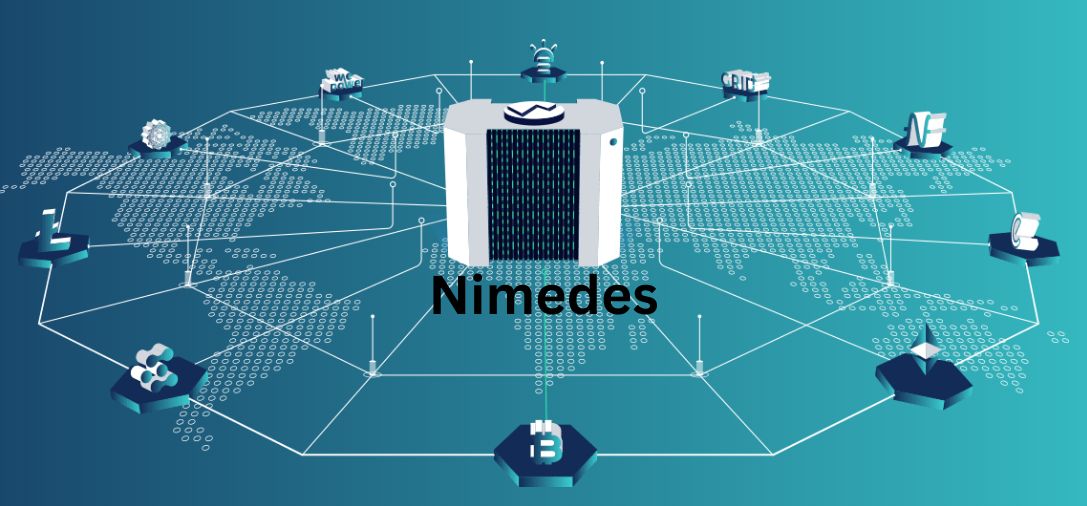
The phrase estrategia de plataforma — platform strategy — describes something more specific than simply offering software alongside hardware. In WiseCon’s model, the platform strategy refers to a scalable, cloud-based infrastructure architecture designed to connect heterogeneous devices — traps, sensors, communication modules, and user interfaces — into a unified, interoperable ecosystem.
The system uses open APIs to integrate with third-party platforms including building management software, quality management systems, and regulatory compliance dashboards. This interoperability is what elevates the anticimex 3d sanidad ambiental / wisecon estrategia de plataforma from a product offering to a true infrastructure play. Data from devices installed across geographically dispersed sites flows into shared analytical environments where patterns, anomalies, and risk trajectories become visible — not just to field technicians, but to facility managers, quality directors, and compliance officers reviewing dashboards in real time.
How the Platform Aggregates and Acts on Data
The operational mechanics work as follows. Following an initial site assessment in which technicians map high-risk zones across a facility, a network of connected sensors and smart traps is installed according to a risk-weighted layout. Each device continuously logs environmental data — motion signatures, temperature fluctuations, humidity levels, and trap trigger events — and transmits it wirelessly to the central platform.
The platform processes this data stream, applies historical baselines and predictive algorithms, and generates alerts when activity patterns suggest emerging risk. Technicians receive precise, location-specific intervention instructions rather than conducting broad scheduled inspections. This precision reduces unnecessary site visits, cuts pesticide application by targeting only confirmed risk areas, and creates a continuous audit trail that satisfies regulatory documentation requirements without additional administrative overhead.
The Anticimex 3D Sanidad Ambiental / WiseCon Estrategia de Plataforma in Practice
Sector-Specific Applications
Different industries interact with this platform model in ways shaped by their particular risk profiles. In food manufacturing, the stakes of a pest event extend beyond operational disruption into product recalls, regulatory sanctions, and reputational damage that can persist for years. The Anticimex-WiseCon platform addresses this by providing continuous monitoring with tamper-evident logs — documentation that can be produced instantly during audits or inspections without the delays inherent in paper-based records.
Healthcare facilities face an analogous challenge: vulnerable patient populations create a zero-tolerance environment for pest-related contamination, while simultaneously demanding that control interventions cause minimal chemical exposure. The non-toxic, sensor-and-trap-based approach at the heart of the platform is structurally suited to this constraint. Documented results from manufacturing facilities in Madrid show pest-related production delays dropping by over 40% following full platform implementation, illustrating the measurable operational return that accompanies hygiene compliance gains.
Hospitality operators — hotels, restaurant chains, event venues — gain a different kind of value: guest experience protection. A single reported pest sighting can generate lasting damage across review platforms. Continuous monitoring provides early detection before visibility escalates to customer-facing consequences, and the dashboard visibility allows property managers to demonstrate proactive due diligence to brand standards teams and franchise auditors.
Municipal and Public-Sector Deployments
Anticimex 3D Sanidad Ambiental holds contracts with city councils and public procurement bodies across Spain, bringing the platform’s monitoring capabilities into parks, sewerage systems, and public infrastructure. These deployments present a scale challenge that underscores the strategic wisdom of the platform architecture: managing hundreds of geographically distributed monitoring points across open urban environments would be operationally impossible without centralized data aggregation and automated alert routing.
The WiseCon platform handles this by treating geographic distribution not as a complication but as a native use case. Each device is an addressable node in a network, and adding new sites requires provisioning additional nodes rather than redesigning the system. This scalability is what allows Anticimex 3D Sanidad Ambiental to serve clients ranging from a single hotel property to an entire city’s public sanitation infrastructure through a single, unified operational framework.
Why This Platform Strategy Matters Beyond Pest Control
A Blueprint for Digital Environmental Services
The commercial logic of the anticimex 3d sanidad ambiental / wisecon estrategia de plataforma extends beyond pest management into a broader lesson about how legacy service industries can use digital infrastructure to transform their business models. Traditional pest control was priced as a series of discrete service events — a treatment visit, a follow-up inspection, an emergency call-out. Each event was a separate revenue occasion, but also a separate cost occasion, with technician time, vehicle costs, and chemical materials consumed regardless of whether the visit revealed anything actionable.
The platform model reorients this economics entirely. Continuous monitoring converts what was an episodic service into a subscription-based relationship where the digital infrastructure does the ongoing monitoring work and human technicians are deployed only when data justifies their presence. This shift creates more predictable revenue for the service provider and more predictable costs — and outcomes — for the client. It also opens new service categories: data reporting, compliance certification, trend analysis, and risk consulting become value-addable services that did not exist in the traditional model.
Machine Learning and the Future of Predictive Pest Management
Looking forward, Anticimex’s innovation roadmap points toward deeper integration of machine learning models that move the platform’s capability from detection to genuine prediction — identifying infestation risk before any physical pest activity is recorded, based on environmental condition patterns associated with historical pest events. Connecting pest monitoring data with smart building management platforms will allow facility conditions — ventilation, temperature control, structural maintenance schedules — to be optimized not just for energy efficiency but for pest risk reduction.
This positions the platform not as a mature, static product but as an evolving infrastructure asset that becomes more valuable as it accumulates operational data. For clients in regulated industries, that trajectory represents a compounding compliance advantage that traditional point-in-time pest control services cannot replicate.
Key Takeaways
- Anticimex 3D Sanidad Ambiental is Spain’s arm of the global Anticimex Group, operating under ISO 9001:2015 certification and serving food production, healthcare, hospitality, logistics, and public-sector clients across the country.
- WiseCon began as a Danish specialist in electronic rodent traps and monitoring hardware; Anticimex acquired 20% in 2015 and the remaining 80% in 2017, establishing the Anticimex Innovation Center in Denmark to drive global digital pest control development.
- The platform strategy (estrategia de plataforma) is a cloud-based, API-open infrastructure that connects IoT sensors, smart traps, and user-facing dashboards into a unified ecosystem — enabling multi-site monitoring, real-time alerting, and predictive analytics.
- The 3D framework (Detect, Deter, Defend) is the operational philosophy that governs how the platform’s data translates into field action, shifting pest management from reactive extermination to preventive environmental stewardship.
- Documented outcomes include a 40%+ reduction in pest-related production delays in manufacturing environments, significant cuts in chemical application, and improved regulatory compliance documentation across all sectors served.
- Future development is focused on machine learning-driven risk prediction, integration with building management systems, and expansion of non-toxic monitoring applications beyond rodent control into broader pest categories.
This combination of hardware precision, cloud-scale data architecture, and disciplined platform strategy is what makes anticimex 3d sanidad ambiental / wisecon estrategia de plataforma a genuine benchmark for environmental services in the digital era — not merely a technology upgrade to an old industry, but a structurally different way of thinking about what environmental health protection means, who delivers it, and how its value is measured. Businesses operating in compliance-sensitive environments should evaluate this model not as a vendor selection decision, but as a strategic infrastructure choice that shapes their environmental risk profile for years to come.
Also Read: Stormuring: What It Really Means and Why It Changes How You Face Disruption