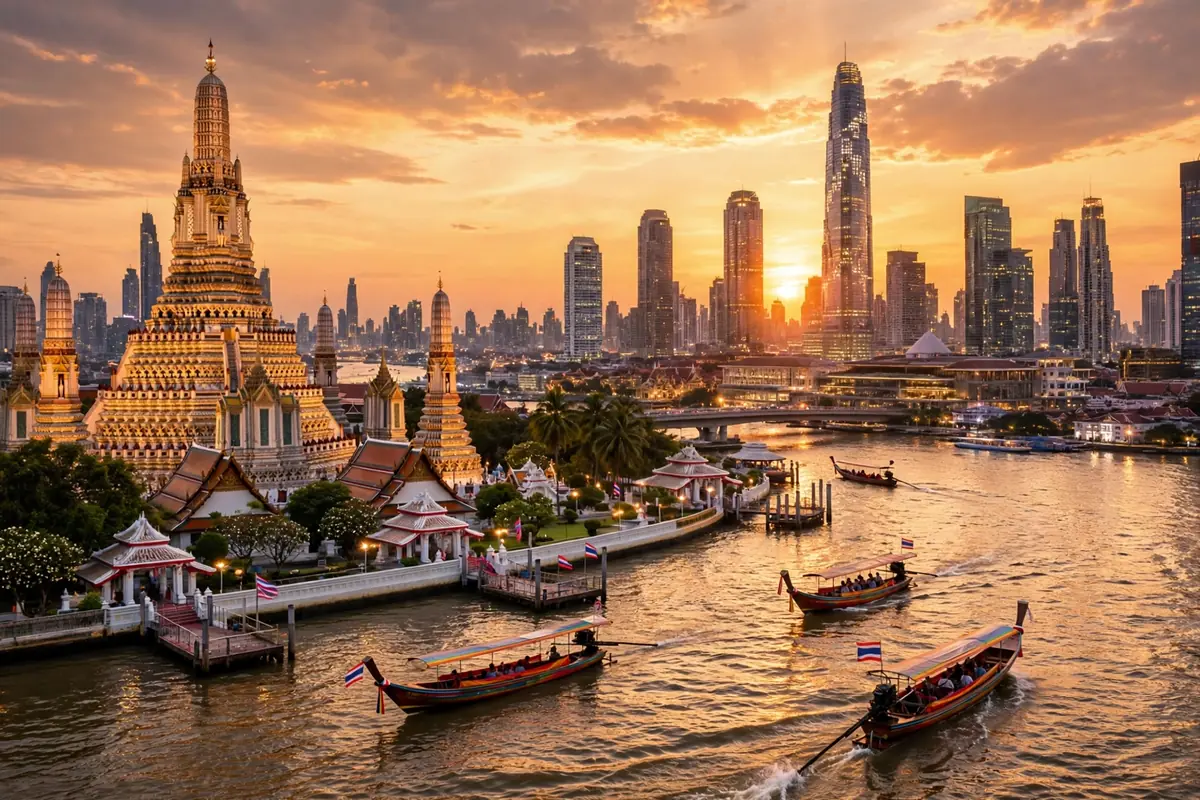
How many days in Thailand is enough? It is the first question almost every first-time visitor asks, and the honest answer depends on what you want from the trip. Thailand is not a one-city destination. It is a country of buzzing cities, misty mountains, jungle temples and hundreds of islands, and each part of it deserves real time rather than a rushed photo stop.
The short answer is that 10 to 14 days is ideal for a first trip. That gives you enough time for Bangkok, the north around Chiang Mai, and at least one island or beach region, without spending half your holiday in airports and on buses. Seven days can still work, but you will have to choose between the north and the islands. Three or four days is really only enough for Bangkok alone.
This guide breaks down what each trip length actually gets you, how long to spend in each place, and the practical rules you need to know before you book, so you can pick the number of days that fits your time, your budget and your travel style.
The Short Answer: 10 to 14 Days Is Ideal
For most first-time visitors, 10 to 14 days is the sweet spot. Thailand rewards slow travel. Distances are long, the heat is real, and the best experiences, a morning market, a slow boat ride, a temple at sunrise, take unhurried time. Before you book, check the latest entry details on the Tourism Authority of Thailand website, since visa rules and arrival requirements can change.
Ten days lets you see Bangkok, Chiang Mai and one island group properly. Fourteen days adds a second island or beach stop, or a slower pace with rest days built in. It also leaves room for the unexpected: a delayed ferry, a rained-out afternoon, or a place you love so much you decide to stay an extra night.
If you only have a week, you can still have a great trip, but you need to be honest about the trade-off. A seven-day trip means picking two of the three big regions, not all three. Trying to squeeze Bangkok, Chiang Mai and the islands into seven days turns a holiday into a checklist, and you will remember the travelling more than the places.
What 3 to 5 Days Gets You: One Place, Done Well
Three to five days is enough for a single destination. Bangkok alone can easily fill four days, and that is a perfectly good short trip. You can explore the Grand Palace and Wat Pho, eat your way through Chinatown, take a boat along the Chao Phraya River, browse the weekend markets and still have an evening for a rooftop bar.
Alternatively, five days works well for a single beach base. Fly into Phuket or Krabi, settle into one area, and spend your days on the sand, on boat trips and in the night markets. What five days does not do is combine a city and the beach properly, because the travel day between them eats a full day each way once you count packing, transfers and check-in.
A short trip works best when you resist the urge to add “just one more place”. Pick one base, explore it properly, and save the rest of Thailand for next time. Thailand is a country people return to again and again, and there is no prize for seeing it all in one go.
What 7 Days Gets You: Bangkok Plus One Region
Seven days is the most common trip length, and it works well if you plan it as Bangkok plus one other region. The classic split is three or four days in Bangkok, then three or four days in either the north or the islands.
Bangkok plus Chiang Mai is the culture-first option. You get the temples, markets and street food of the capital, then the slower pace, mountain air and temple-dotted old city of the north. The flight between the two takes about an hour and ten minutes, so the travel day is not too painful.
Bangkok plus the islands is the beach-first option. Three days in the capital, then four days on Phuket, in Krabi or on Koh Samui. You get the city energy first, then the sea. This is the better choice if your main goal is to relax and swim.
What seven days cannot do is all three. Bangkok, Chiang Mai and the islands in one week means at least three travel days, and you would spend barely two full days in each place. It is possible on paper, but it is exhausting in practice, especially in the heat.
How Many Days in Thailand Is Enough for First-Timers?
If this is your first visit and you can take ten days or more, the question of how many days in Thailand is enough has a clear answer: ten days is enough to see the highlights, and fourteen days is enough to enjoy them properly. Ten days is the minimum for the classic first-timer route, and it is the length we recommend most often.
A good ten-day route looks like this. Days one to three in Bangkok, for the temples, the river, the markets and the food. Day four, fly to Chiang Mai and spend three days there, exploring the old city, visiting Doi Suthep, taking a cooking class or a day trip to the mountains. Days seven to ten, fly south to the islands, Krabi or Phuket, for beaches, boat trips and a slow finish.
Fourteen days takes the same route and adds breathing room. You can add a fourth day in Bangkok, a day trip from Chiang Mai to Pai or Chiang Rai, or a second island. The extra days also act as a buffer. If a ferry is cancelled by rough seas or a stormy afternoon keeps you indoors, you have time to spare instead of losing a highlight.
How Long to Spend in Each Place
Getting the split right matters more than the total number of days. These are the minimums that work well, based on how most travellers actually experience each place.
Bangkok needs three to four days. Two days is enough for the main temples and a market or two, but Bangkok is a city that reveals itself slowly. The third and fourth days are when you find the neighbourhoods, the canal boats, the food streets and the quieter temples that most short visits miss. If you love cities and food, give it four days.
Chiang Mai needs three days. One day for the old city temples and markets, one day for Doi Suthep and the surrounding countryside, and one day for something slower, a cooking class, an elephant sanctuary visit, or a day trip into the mountains. Chiang Mai is also a good base for a slower pace, so a fourth day here never feels wasted.
Each island stop needs four to five days. This surprises people, but island time moves slowly by design. One day is lost to arrival and settling in. A boat trip to the Phi Phi Islands or the Similans takes a full day. You will want at least one full beach day with nothing planned, and a day for the local town, the night market and a sunset viewpoint. Three days on an island feels rushed. Four to five feels right.
If you are visiting two island areas, budget at least four days for each, because the transfer between them, by ferry and road, can take most of a day. This is why fourteen days works so much better than ten for a two-island trip.
What 14 Days and More Gets You
Fourteen days opens up the routes that shorter trips cannot reach. You can do Bangkok, Chiang Mai and two island groups. You can add Pai, the laid-back mountain town three hours from Chiang Mai. You can add Kanchanaburi, with its river, waterfalls and history, or Ayutthaya, the old capital an easy day trip from Bangkok.
Three weeks is the length for a proper slow trip. With 21 days you can travel overland between regions instead of flying, spend a week on a single island, or add the quieter east coast and the north-east. Thailand is one of the best countries in the world for slow travel, because the food is cheap, the transport is easy and every region feels different.
Longer trips also cost less per day. Accommodation and food are inexpensive outside the most touristy areas, and a slower pace means fewer flights and transfers. If you can work remotely or take a longer break, Thailand rewards it.
When to Go: The Seasons Matter
The number of days you need also depends on when you go. Thailand has three main seasons, and they change what a trip feels like.
The cool, dry season runs from November to February. This is the best time to visit, with lower humidity, clearer skies and comfortable temperatures. It is also the busiest and most expensive time, especially around Christmas and New Year, so book accommodation early.
The hot season runs from March to May. Temperatures in Bangkok and the central plains can climb above 35 degrees Celsius, and sightseeing in the middle of the day becomes hard work. If you travel in this season, plan temple visits for the early morning, rest in the afternoon, and budget more days, because you will move more slowly.
The rainy season runs from June to October. Rain usually falls in short, heavy bursts rather than all day, and prices drop. The Andaman coast, Phuket and Krabi, gets the heaviest rain and roughest seas in these months, and some island boat trips stop running. The Gulf coast, Koh Samui and Koh Phangan, is often drier in the middle of this period, so it is a better choice for a summer beach trip.
If your dates are fixed, choose your regions to match the season. If your regions are fixed, choose your dates to match them. Either way, a few extra days give you the flexibility to work around a rainy afternoon.
Visa and Entry Rules as of November 2026
Entry rules change, so always check the official sources before you travel, but as of November 2026 the basics are these. Most visitors from the UK, the EU, the US, Canada, Australia and many other countries can enter Thailand visa-free. Since 15 September 2026, the visa exemption gives most nationalities 30 days, after the earlier 60-day exemption was shortened. If you need longer, you can apply for a tourist visa before you travel or extend a visa-free stay once inside Thailand.
Every foreign visitor must also complete the Thailand Digital Arrival Card, known as the TDAC, online within 72 hours before arrival. It is free, it replaces the old paper arrival card, and you submit it at the official immigration website. Your passport should be valid for at least six months beyond your arrival date, and airlines often enforce this strictly, so check your passport expiry before you book anything.
If you are planning a trip of more than 30 days, sort out your visa before you travel rather than hoping to extend later. Overstaying a visa in Thailand brings fines and can cause problems on future visits. The Tourism Authority of Thailand publishes current entry information, so check the latest details on its official site before you fly.
How to Travel Between Regions
Internal flights are the fastest way to cover Thailand’s distances, and budget airlines connect Bangkok with Chiang Mai, Phuket, Krabi, Koh Samui and most other destinations. Book early for the best prices, and remember that Bangkok has two airports, Suvarnabhumi and Don Mueang, so check which one your flight uses.
Overnight trains are a good option for the Bangkok to Chiang Mai route, and they save a night of accommodation. Sleeper buses are cheaper still but less comfortable. Ferries connect the mainland with the islands, and in rough weather they can be delayed or cancelled, which is another reason to build spare days into an island itinerary.
Within cities, the Bangkok metro and Skytrain are fast and cheap. Elsewhere, ride-hailing apps work well in the main tourist areas, and songthaews, the shared pickup trucks used as local buses, are the cheapest way to get around smaller towns.
Common Mistakes When Planning How Long to Stay
The most common mistake is trying to see everything. Thailand is roughly the size of France, and first-timers often plan a route that would need a month. Cut one destination from your list and you will enjoy the rest far more.
The second mistake is underestimating travel days. A flight from Bangkok to the islands is only an hour in the air, but the full journey, hotel to hotel, is usually five to six hours once you add transfers, check-in and the ferry. Count travel days as travel days, not as sightseeing days.
The third mistake is skipping rest days. The heat, the early starts and the constant newness of Thailand are tiring, and a day with nothing planned is not a wasted day. It is often the day you stumble on your favourite meal or your favourite view.
The fourth mistake is booking every night in advance. For a first trip, book the first few nights and the last night, and leave the middle flexible. If you love a place, you can stay longer. If you do not, you can move on.
A Simple Way to Decide
If you are still unsure, use this rule of thumb. Three to five days: pick one place. Seven days: Bangkok plus the north or the islands. Ten days: Bangkok, Chiang Mai and one island group, which is the classic first trip. Fourteen days: the same route at a relaxed pace, or add a second island. Three weeks or more: slow travel, overland routes and the quieter regions.
Your trip length should match your energy, not just your calendar. If you travel fast and love packing a lot into each day, you can do more in fewer days. If you like slow mornings and long lunches, add two days to whatever you planned. Thailand is not going anywhere, and the best trips are the ones that leave you wanting to come back rather than needing a holiday to recover from your holiday.
Planning a longer journey is a lot like planning any big trip: the paperwork matters as much as the itinerary. Visa rules differ by destination, so if you are comparing Thailand with other countries, our guide to whether US citizens need a visa for Turkey shows how different the rules can be from one country to the next. And if you enjoy slow, scenic travel, a walk through a valley like the Enntal in Austria is a reminder that the journey itself can be the highlight. For beach days, a practical fishing guide for the Gulf coast shows how much fun a slow day by the water can be.
Frequently Asked Questions
How many days in Thailand is enough for a first trip?
Ten to fourteen days is enough for a first trip. Ten days covers Bangkok, Chiang Mai and one island group. Fourteen days adds a second island or a slower pace with rest days. Seven days works if you choose two regions instead of three.
Is 7 days enough for Thailand?
Seven days is enough for Bangkok plus one other region, either the north around Chiang Mai or the islands in the south. It is not enough for all three regions. Trying to fit Bangkok, Chiang Mai and the islands into seven days means spending most of your time travelling.
How many days do you need in Bangkok?
Bangkok needs three to four days. Two days covers the main temples and markets, but three or four days lets you explore the neighbourhoods, the river, the food streets and the quieter sights. If you love cities and food, give it four days.
How many days do you need in Chiang Mai?
Chiang Mai needs three days: one for the old city temples, one for Doi Suthep and the countryside, and one for a cooking class, a sanctuary visit or a mountain day trip. A fourth day works well if you want a slower pace or a day trip to Pai.
How many days do you need on the Thai islands?
Plan four to five days per island stop. One day is lost to arrival, a boat trip takes a full day, and you will want at least one unstructured beach day. Three days on an island feels rushed, especially once ferry transfers are counted.
What is the best month to visit Thailand?
November to February is the best time for most of Thailand, with cooler, drier weather. The Andaman coast is driest then, while the Gulf islands are often better from February to August. Avoid the hottest weeks of March and April if you plan a lot of sightseeing.
Do I need a visa for Thailand?
Most visitors from the UK, EU, US, Canada and Australia can enter visa-free. As of November 2026, the visa exemption gives most nationalities 30 days. All foreign visitors must also complete the free Thailand Digital Arrival Card online within 72 hours before arrival, and your passport should be valid for at least six months.