A trallehylde is a Danish wooden shelf made from, or inspired by, reclaimed scaffolding platforms. The word combines two Danish terms: “tralle”, a plank-style board of the kind used on building scaffolds, and “hylde”, which means shelf.
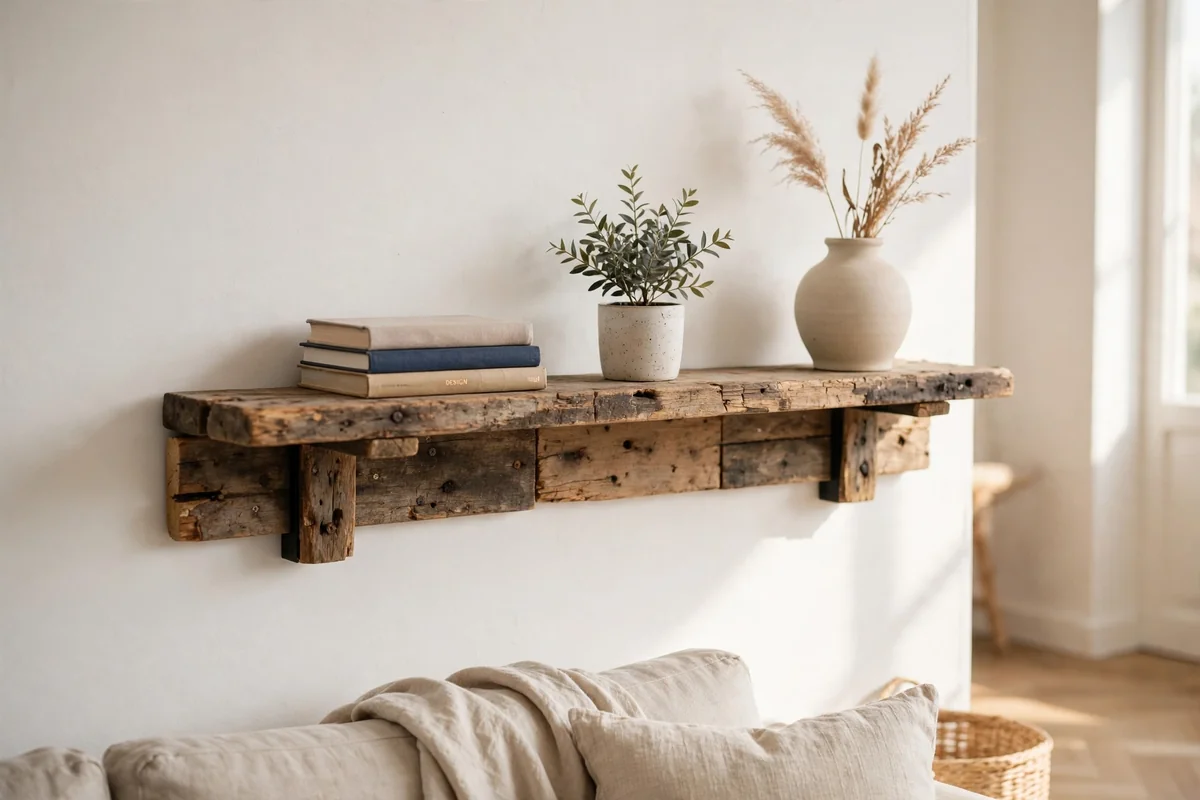
In Danish shops, a trallehylde is a rustic wall shelf, usually a thick plank of reclaimed wood with a worn, industrial character. It is popular in Scandinavian interiors because it pairs natural wood with a story: the shelf was once part of a working scaffold before it became part of a home.
Online guides do not always agree on what the word means. Some describe a trolley shelf or a mobile storage unit instead. This guide clears that up, explains the Danish roots, and covers styles, prices, hanging tips and care.
What Does Trallehylde Mean?
Trallehylde is a Danish compound word, and breaking it into parts is the fastest way to understand it.
“Hylde” is the easy half. It means shelf in Danish, and it is also translated as board or plank in some contexts. Any shelf in a Danish home can be called a hylde.
“Tralle” is the more interesting half. In Danish dictionary usage, wooden traller have traditionally served as walking platforms on scaffolding. The historical Danish dictionary, Ordbog over det danske Sprog, records “tralle” with meanings connected to bars, grilles and lattice-like structures, and notes compounds such as “tralledør” (a barred door) and “tralleværk” (lattice work).
The editors of Den Danske Ordbog, Denmark’s national dictionary, have also addressed the word directly. In their answer to a reader’s question, they note that they have heard “traller” used for horizontal slatted plates to walk and stand on in scaffolding. The word was later added to the dictionary. You can read Den Danske Ordbog’s explanation of tralle on ordnet.dk, the dictionary’s own site.
Put the two halves together and a trallehylde is a shelf made from, or inspired by, a scaffold platform. In practice, Danish furniture makers sell it as a wall shelf cut from a thick plank, usually reclaimed wood.
Why Online Guides Disagree About Trallehylde
If you have read other articles about this topic, you may have noticed that they do not agree. Some describe a trallehylde as a shelf made from several parallel slats. Others translate the name as a “shelf on a trolley” and describe a movable unit with wheels.
The trolley reading comes from a different understanding of “tralle”. In some contexts the word is associated with trolleys and wheeled carts, so a trallehylde gets described as a shelf for a trolley, a replacement shelf component, or a complete mobile storage unit with several levels.
When you look at what Danish furniture makers actually sell under the name, the picture is much more consistent. The product is a wall shelf made from a thick plank, usually reclaimed wood. One Copenhagen-area workshop describes its trallehylde as a raw, weathered shelf built from original scaffold planks, each with its own patina. Another maker explains that its shelves are cut from a small piece of a tralle, then cleaned, sanded, burned and lacquered so the wood grain stands out.
So if you are shopping, use the Danish retail meaning as your guide: a rustic wooden wall shelf. Read each product description carefully before you order, because a seller using the trolley meaning will be offering something quite different.
The term is best understood as a material and design association, not a universally standardised shelf. There is no single official specification for a trallehylde. What holds the category together is the scaffold-board origin and the rustic look.
What a Trallehylde Looks Like
A typical trallehylde is a single thick plank, mounted on a wall with brackets or hidden fixings. The wood is usually reclaimed scaffold board, so each shelf carries marks from its working life: nail holes, saw marks, colour variation and a weathered surface.
Some makers keep the wood raw and untreated, which gives the most rustic result. Others sand the surface smooth, burn it lightly to bring out the grain, and finish it with oil or lacquer. Both approaches keep the character of the reclaimed wood while making it suitable for a living room.
Oak versions exist too, often with black metal spacers or brackets that add a modern contrast to the warm wood. Spruce is the more common and more affordable timber, since scaffolding planks are usually softwood.
The style fits naturally with Scandinavian interior design. Danish homes favour light walls, natural materials and simple forms, and a trallehylde adds warmth and texture without clutter. It also fits industrial and farmhouse styles, where rough wood and visible history are part of the look.
Because each shelf comes from reclaimed timber, no two are identical. The grain, colour and marks vary from piece to piece. That variation is part of the appeal for most buyers, but it is worth knowing before you order: the shelf you receive will resemble the product photo, not match it exactly.
Sizes, Weight and Typical Prices
Sizes vary by maker, but a few examples give a realistic picture. One Danish workshop lists a trallehylde measuring 15 cm deep and 120 cm long. Another lists a model measuring 110 by 30 by 5.8 cm that weighs about 5.2 kg.
The thickness is part of the design. These are not thin floating shelves. A scaffold plank is a substantial piece of wood, and the shelf keeps that solidity. Expect a depth of around 15 to 30 cm and a length of 60 to 120 cm for most models.
Prices listed by Danish sellers range from roughly 495 DKK for a small, recycled piece up to about 1,295 DKK for a larger, untreated spruce version, with oak designs sitting in between. These figures were taken from retailer pages at the time of writing and can change, so always check the current price before buying.
The price reflects the work involved. Reclaimed boards must be sourced, cleaned, checked for nails and metal, cut, sanded and finished. A handmade shelf from a small workshop costs more than a mass-produced board, but it is also a one-off piece.
If you are buying from outside Denmark, remember to add shipping. A thick wooden shelf is heavy, and delivery costs can be a significant part of the total price.
Where to Use a Trallehylde
A trallehylde is flexible enough for almost any room. Its strength is display storage: things you want to see and reach, shown on a shelf that looks good on its own.
In a living room, it works above a sofa or beside a fireplace. Books, framed photos, small plants and ceramics all suit the rustic surface. A single long shelf makes a calm statement. Two or three stacked shelves create a display wall.
In a kitchen, a trallehylde holds everyday items within reach. Jars, cookbooks, mugs and small plants look at home on reclaimed wood. Keep it away from direct steam and splashes, or choose a lacquered finish that is easier to wipe clean.
In a bedroom, it can replace a bedside table. A short shelf beside the bed holds a book, a lamp and a phone without taking up floor space. In a hallway, it gives keys, mail and small items a home near the door.
In a bathroom, use it for towels and toiletries, but only if the finish can handle humidity. Raw wood and damp rooms do not mix well. A sealed or lacquered shelf is the safer choice there.
In a home office or workshop, a trallehylde keeps tools, reference books and supplies visible and organised. The industrial origin of the wood suits a working space.
How to Hang a Trallehylde Safely
Because these shelves are thick and heavy, installation matters more than it does for a lightweight shelf. A 5 kg shelf plus books can put real strain on wall fixings, so take the time to do it properly.
Choose the position first. Hold the shelf against the wall and mark the height with a pencil. Check that the shelf is level before you mark the fixing points.
Find the right fixings for your wall. Solid brick and concrete take standard wall plugs and screws. Plasterboard needs special plasterboard fixings, and the shelf should ideally be fixed into a stud. If you are unsure what your wall is made of, check before you drill.
Use brackets rated for the weight. Hidden floating brackets look clean, but they must be strong enough for a thick wooden shelf plus its load. Visible metal brackets are sturdier and suit the industrial look of the wood.
Drill carefully, fit the plugs, and fix the brackets level. Then place the shelf and check it again with a spirit level before loading it. Load heavy items near the brackets rather than at the ends, where the leverage is greatest.
If you rent your home, check your agreement before drilling. Some landlords allow shelves, others do not. A heavy shelf is not something to fix with adhesive strips.
Caring for a Reclaimed Wood Shelf
Reclaimed wood needs a little more care than a factory-finished shelf, but the routine is simple.
Dust regularly with a dry or slightly damp cloth. Avoid soaking the wood, and wipe up spills quickly. Water left standing on raw wood can stain it or raise the grain.
Oil-finished shelves benefit from re-oiling once or twice a year. A light coat of wood oil, rubbed in and wiped off, keeps the surface protected and the colour rich. Lacquered shelves need less maintenance, but check the finish for chips and scratches.
Keep the shelf out of direct, constant sunlight if you can. Strong sun fades wood over time and can dry it out. A shelf on a sunny wall will still last, but the colour will change.
Check the fixings once a year. Wood moves slightly with changes in humidity, and screws can loosen over time. A quick check keeps a heavy shelf safe.
Buying or Making Your Own
You can buy a trallehylde from Danish furniture workshops and online retailers, or you can make one yourself if you enjoy woodwork.
Buying is the easier route. A workshop handles the sourcing, cleaning and finishing, and you receive a ready-to-hang shelf. Look for sellers who describe the wood as reclaimed scaffold board and who show real photos of their work.
Making your own is possible if you can source genuine scaffold boards. Check that the wood is untreated and free of chemical contamination. Old boards may contain nails, staples and embedded metal, so inspect them carefully and remove all metal before cutting. Sand thoroughly, and finish with oil or lacquer.
Never use boards from an unknown source without checking them. Scaffolding timber is generally safe, but boards that were used with chemicals or stored in contaminated places are not suitable for a home.
Whether you buy or build, the result is the same idea: a practical shelf with a past, made from wood that would otherwise have been discarded. It is a small piece of recycling that happens to look good on a wall.
Scandinavian Design and the Home
The trallehylde fits into a wider Scandinavian approach to the home: natural materials, simple forms, and objects that earn their place by being both useful and beautiful. It sits well alongside other practical home projects, from landscaping a garden to setting up an outdoor cooking space with a Weber grill demonstration.
The lesson of the trallehylde is that good design does not need new materials. A scaffold board, cleaned and finished with care, becomes a shelf with more character than anything made from fresh timber. That is a useful idea for any room in the house.
Frequently Asked Questions
What does trallehylde mean in English?
Trallehylde is a Danish word combining “tralle”, a scaffold-style plank, and “hylde”, meaning shelf. In Danish shops it describes a rustic wooden wall shelf, usually made from reclaimed scaffold boards.
Is a trallehylde a trolley shelf?
Some online guides translate it that way, but Danish furniture makers sell the trallehylde as a wall-mounted wooden shelf. The trolley reading comes from a different sense of the word “tralle”. When shopping, read the product description to confirm which meaning the seller intends.
What wood is a trallehylde made from?
Most are made from reclaimed scaffold boards, usually spruce or another softwood. Oak versions also exist. The wood is cleaned, sanded and finished, but it keeps marks from its working life, such as nail holes and colour variation.
How much does a trallehylde cost?
Danish sellers list prices from roughly 495 DKK for a small recycled piece to about 1,295 DKK for a larger untreated spruce version. Prices vary by size, wood and maker, and shipping can add significantly to the total outside Denmark.
How do I hang a trallehylde safely?
Use fixings suited to your wall type, brackets rated for the shelf’s weight plus its load, and a spirit level to keep it straight. Fix into solid wall or studs where possible, and load heavy items near the brackets rather than at the ends.
How do I care for a reclaimed wood shelf?
Dust regularly, wipe up spills quickly, and re-oil oil-finished shelves once or twice a year. Keep the shelf out of constant direct sunlight, and check the wall fixings once a year.